
Why Choose The Northern Circuit Route?
This route rolls up the best that all other routes have to offer. If you’re looking for beautiful scenery, plenty of solitude, a healthy challenge, and a chance to spot wildlife, this is definitely the route for you.
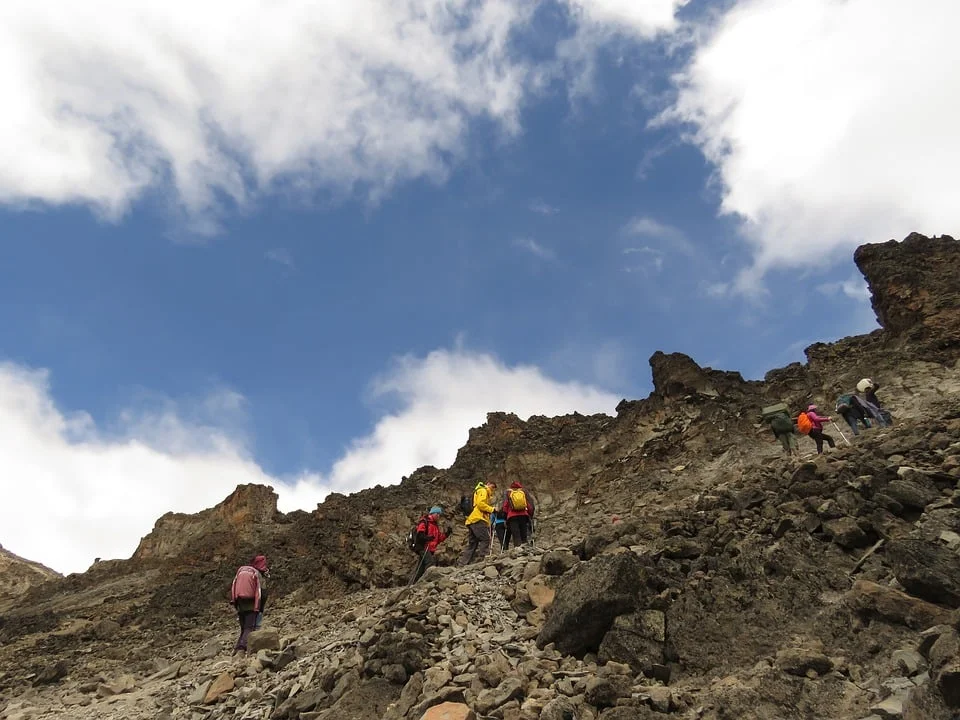
Northern Circuit Route Itinerary
The itinerary below describes the 8 nights/9 day Kilimanjaro climb via the Northern Circuit route. A 10 day variation that includes an overnight at Crater Camp is available as a private climb by special request.
Your Content Goes Here
Your Content Goes Here
Your Content Goes Here
Your Content Goes Here
Your Content Goes Here
Your Content Goes Here
Your Content Goes Here
Your Content Goes Here
Your Content Goes Here
Your Content Goes Here
Arrival in Tanzania
You will be picked up at the Kilimanjaro International Airport and transferred to your arranged hotel in Moshi town. You will meet your guide who will brief you on your upcoming trek and do an equipment check to make sure you have all the necessary mountain gear. Gear which is missing can be rented on this day.
Londorosi Gate – MTI Mkubwa Camp
The Northern Circuit Route starts at Londorossi Gate (2,100 meters) in the west, the same as the Lemosho Route. The drive takes about two hours from Moshi and longer from Arusha. After registering with the Kilimanjaro National Park authorities, you’ll be driven to the trailhead. Most tour operators serve lunch here before the short trek to Mti Mkubwa Camp (2,820 meters). You might spot wildlife like elephants and buffalo as you trek. Dinner will be served at Mti Mkubwa Camp.
Mti Mkubwa – Shira One
Today you will spend the first hour trekking through the last section of rainforest path before entering the low alpine moorland zone which follows up onto the Shira Plateau. The trek is relatively short and gradual, ending at Shira Camp 1 (3,610 meters).
Shira Camp One – Shira Camp Two
On day three, the trek crosses the Shira Plateau from Shira Camp 1 to Shira Camp 2 via Shira Rock Peak. Nine-day trekkers spend the night at Shira Camp 2, joining those from the Machame Route. It’s worth trekking higher up the plateau for stunning views of the valley and the Western Breach of Kilimanjaro. The exposed plateau can be very cold, with temperatures dropping below zero. Eight-day trekkers continue east up the Shira Plateau ridge to Lava Tower (4,600 meters) and then descend via the Northern Circuit to Moir Camp (4,200 meters).
Shira Camp Two – Moir Camp
The trek on this is long heading east which passes through the ‘Garden of the Senecios’ and then enters the high alpine desert zone. The morning is spent trekking up to Lava Tower and the iconic Shark’s Tooth rock formation at 4,600 meters, where you will have lunch. After lunch you will join the northern circuit heading down to Moir Camp at 4,200 meters (see map above). This is an important day in your trek as you will get to experience high altitude and then sleep low, which is good for the acclimatization process.
Moir Camp – Buffalo Camp
This day is moderately involving the steep climb out of Moir Valley. Trekkers can take a small detour here to climb the summit of Little Lent Hill at 4,375 meters before returning to the Northern Circuit trail. From here the route follows a series of inclines and declines, skirting around the northern slopes of Kibo to Buffalo Camp (4,020 meters).The trek gives great vistas out across the plains that lie north of Kilimanjaro and stretch out to the Kenyan / Tanzanian border. You will arrive at Buffalo Camp just after midday, where you will have lunch and have time to rest after a long day hiking.
Buffalo Camp – Third Cave Camp
This day begins with a climb up the Buffalo ridge and down into Pofu Camp where lunch is usually served. The route then continues east around the northern slopes to the Rongai Third Cave at 3,800 meters. The trek is shorter than the day before and by now you should be feeling well acclimatized to the altitude. You will arrive at the Third Cave just around mid-afternoon.
Third Cave Camp – School Hut Camp
This day involves a steady incline up and over the Saddle which sits between the peaks of Kibo and Mawenzi Peak. Trekkers then continue walking south-west up to School Hut (4,800 meters). After arriving at School Hut, you will be served an early dinner and then you should get some shut eye as you will be awoken before midnight to start your summit attempt. Remember to prepare all your gear, including warm clothes, insulated water bottles, snacks, headlamp and camera before going to bed.
Third Cave Camp – Uhuru – Millennium Camp
You’ll wake at 11:30 for hot tea and biscuits, then start the steep climb up Kibo in darkness. After a break at Hans Meyer Cave, continue to Gilman’s Point (5,681 meters) in 5-6 hours. Enjoy the dawn and views of Mawenzi Peak, then trek 2 more hours to Uhuru Peak. After quick photos, descend to Stella Point (5,739 meters), then down to Barafu Camp (4,680 meters) for a short break. Finally, continue to Millennium Camp (3,950 meters) for your last night. The trek lasts 14-16 hours, so pace yourself, stay hydrated, and keep your energy up. Note: Some tour operators return via Gilman’s Point to Horombo Hut using the Marangu Route.
Millennium Camp – Mweka Gate
The final day is a short hike through the dense montane rainforest from Millennium Camp (3,950 meters) to Mweka Gate (1,640 meters). At the gate you will need to sign-out with the authorities, who will also provide you with your official certificate – a green certificate for those who made it to Gilman’s Point and a gold certificate for those who reached Uhuru Peak. It is customary to give your guide and porter tips before being driven back to your hotel in Moshi.
Trek Highlights
Throughout your journey you will Witness incredible natural landscapes from lush forests to towering peaks, and if you’re lucky, catch a glimpse of diverse wild animals, including majestic elephants, in their natural habitat.
Remoteness
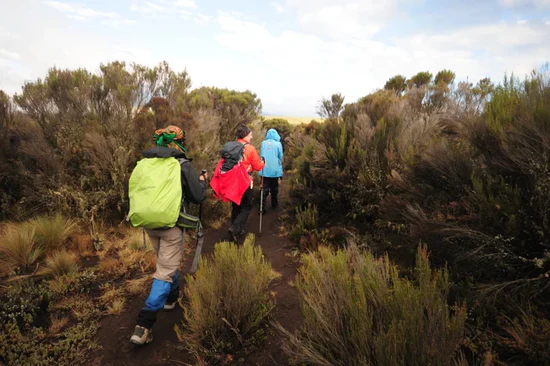
The Northern Circuit route is less traveled and offers a more isolated and wilderness experience. This remote nature also means that the route has fewer facilities, making it a more challenging and rugged experience for hikers.
Longest Route
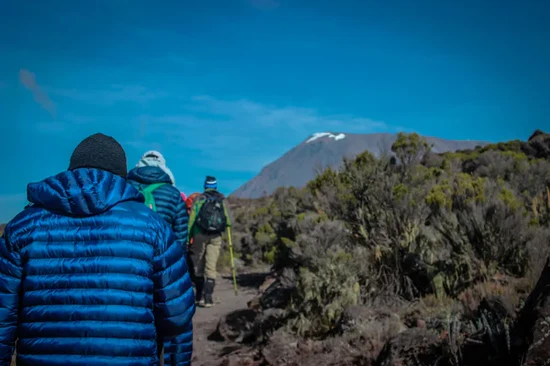
The northern circuit is typically completed over 9 days, which is longer than the 5-8 days taken on other routes. The longer duration allows for a more leisurely pace and through the different vegetation zones along the way.
Gradual Ascent
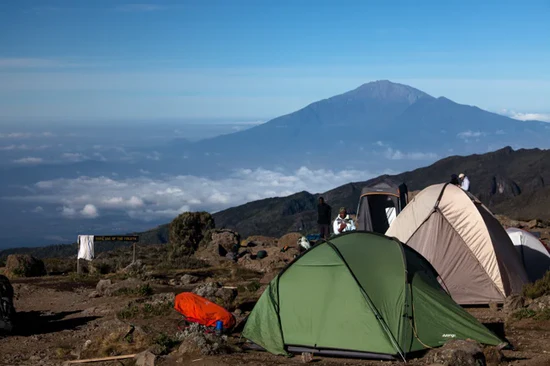
This trail covers a distance of about 70-80 kilometers (43-50 miles) and over 9 days. The ascent is around 4,000 m (13,123 ft) from the starting elevation of 1,800 m (5,906 ft) to the summit of Kilimanjaro at 5,895 m (19,341 ft).
Diverse Scenery
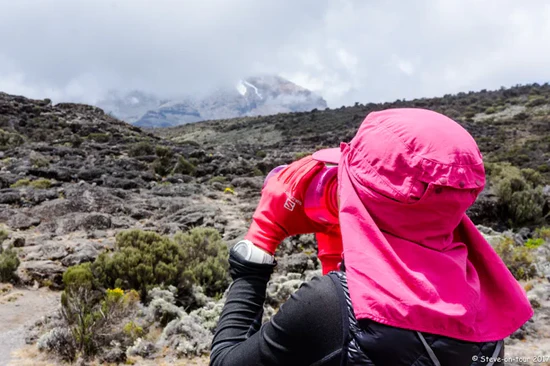
The Northern Circuit route offers a different and more diverse scenery including views of the Northern and Eastern slopes of Kilimanjaro, which are less frequently seen by other routes.
Wildlife
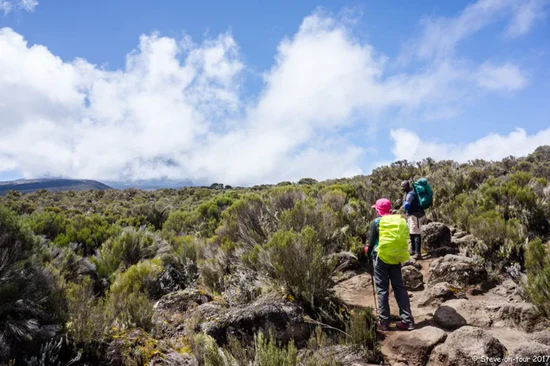
The Northern Circuit route passes through different vegetation zones, including the Montane Forest, the Moorland, and the Alpine Desert, providing a more diverse range of habitats for wildlife.
What’s Included In The Price
We take a lot of pride in the value for money we provide to each and every client. Below are the prices for this adventure with per-person prices based on how many people are looking book. Our prices prioritize your health, safety and experience along your journey.
| 1 person | $2,830 |
| 2-5 persons | $2,495 |
| 6-10 persons | $2,440 |
| 11+ persons | $2,390 |
| 1 person | $3,535 |
| 2-5 persons | $3,155 |
| 6-10 persons | $3,095 |
| 11+ persons | $3,039 |
About Our Accommodation and Facilities
After an invigorating hike through breath-taking landscapes, you’ll arrive at our fully equipped camps. Rest assured, these aren’t just empty spaces; our camps are meticulously prepared with all the food, water, and necessities you’ll need to refuel and recharge. From delicious, freshly prepared meals to ample supplies of purified drinking water, we’ve taken care of every detail, ensuring your comfort and well-being are paramount as you move along your adventure.
About Our Expert Team
It goes without saying that we treat our porters, cooks, and guides with the utmost respect and fairness. This is not just a policy, but an unbiased evaluation of our unwavering commitment to the fair treatment of our dedicated crew members.
How We Keep You Safe On The Mountain
We prioritize your wellbeing throughout your journey. We provide frequent health checks, fresh food, drinks and security to ensure that your adventure is the best it can be.
Physical Preparation & Packing
We strive to ensure you health & safety during your adventure, the best way to do that is to prepare yourself before you begin. Your journey will be challenging, so make sure that you are in tip top condition, Below are a few exercises we recommend.
- Cardiovascular Fitness: Engage in aerobic activities such as hiking, jogging, cycling, or swimming. Aim for at least 30-60 minutes of exercise, 4-5 times a week.
- Strength Training: Focus on building leg muscles through squats, lunges, and stair climbing. Core and upper body strength are also important.
- Hiking Practice: Go on hikes with a weighted backpack to simulate what you will experience on Kilimanjaro.
You can find more information on our Treq FAQs page by pressing the button below.
What Our Customers Say
Hear what our trekkers have to say about their incredible journey!
KerryT18
Just completed an amazing 9 day trip of the Northern circuit with Popote Adventures. From first contact Sabino and his team were professional and responsive. Sabino runs a tight operation with highly professional guides, cooks and porters. Throughout the 9 days we felt cared for and well looked after. Their professionalism with guides like Florian, MJ and Kennedy meant that all five of us were able to reach the summit and back down safe and well.
charlottef892
My favorite part of the experience was actually the crew. They took really good care of us. Medically we were checked morning and evening and during the trek they checked with us often. The food was cooked freshly for every meal and everyone was helpful and friendly. Personally (because we took the 9 day route) I enjoyed starting in the jungle, hiking up through the moor lands, and further up into alpine desert. Seeing the landscape slowly change was rewarding.
Recommendation: I found the trail much more dusty than expected- i would highly recommend a thin buff for dust… and sun glasses that fit closely.
DanielleEyssens
A trip of a life time with the company that compares to no other. In the lead up to the trip Sabino responded to all questions and helped to ensure I was prepared. From landing in Tanzania I didnt have to worry about a thing. Acommodation before and after was so much better than expected. A perfect place to rest before and relax after. My guide Arthur and the whole team of porters were amazing.
